
Definitions
What is NSO (New Store Opening) coordination in a retail rollout?
NSO stands for New Store Opening — the process of getting a retail store from empty box to open-for-business on a specific date. Here's what's actually in the scope, and where low-voltage fits.
By Lume Engineering Team · Published · Updated
NSO stands for New Store Opening. It is the work of getting a retail store from “empty box” to “open for business” on a specific date, with everything that implies: cabling, WiFi, point-of-sale, signage, security, fixtures, merchandise, staff, and the dozens of small things that have to line up for day one.
For multi-site retail brands, NSO is the rhythm of the business. A brand opening 20 stores a year runs 20 NSOs. The low-voltage scope — cabling, fiber, WiFi, cameras, alarm, signage, sometimes voice — is one part of the NSO, but it is on the critical path. If the cabling is not done, nothing else can plug in.
What is in an NSO scope
A typical multi-site retail NSO includes:
- Construction coordination — the GC handles the build-out; NSO partners work within that schedule.
- Low-voltage scope — structured cabling, fiber backbone, WiFi, CCTV, alarm, digital signage, sometimes voice. Usually one partner handles all of it.
- Fixture and merchandising — separate vendor or in-house team.
- IT cutover — POS, network equipment, payment terminals, back-office systems. Often a different team.
- Operations and training — staff onboarding, opening checklists, day-one runbook.
- Marketing and signage — grand opening, window graphics, sometimes digital signage content.
- Soft opening / hard opening — soft open for staff training, hard open for public.
The brand’s NSO team (sometimes called Store Development, sometimes Real Estate, sometimes Construction) coordinates the whole thing. Their job is to make sure that on opening day, nothing is missing.
Where low-voltage fits in the critical path
For most retail NSOs, the low-voltage scope is on the critical path for two reasons:
- Other trades depend on it. The IT cutover needs cabling terminated and tested. POS needs power and data at the counter. Signage needs power and data at the display. Cameras need cabling and a recorder. WiFi needs cabling and a controller. None of those can start until the cabling is in.
- It has to be right before opening. A mislabeled cable is annoying in an office and a delay in a retail NSO. Rework happens at 11 PM the night before opening, not the next morning.
The result: a low-voltage partner that is on the critical path, working in an active construction environment, with hard deadlines and zero room for surprises. That is what good NSO coordination looks like in practice.
What good NSO coordination looks like
The brands that run smooth NSOs share a few habits:
- A single point of contact for the low-voltage partner. Not a construction manager who is also running six other trades. A real, named NSO or IT coordinator.
- Standardized scope across sites. If every store has the same outlet count, the same AP layout, the same camera coverage plan, the low-voltage partner can move fast. If every store is custom, every store is a project.
- Pre-procurement on long-lead materials. Fiber patch cables, APs, cameras, and POS cabling sometimes have 4–8 week lead times. Last-minute orders do not work.
- Early site walks. 6–8 weeks before opening, not 2 weeks. The first walk answers “is this a standard scope or not” and “what are the gotchas.” That information is what the schedule gets built around.
- Direct handoff to IT. The low-voltage partner hands off tested, labelled, documented cabling to the IT team. The IT team does the cutover. No one waits.
What bad NSO coordination looks like
The opposite is also recognizable:
- Drawings arrive two weeks before opening and are 60% accurate.
- The low-voltage partner is hired after the GC is already mobilized.
- Materials arrive on site without a staging plan.
- The IT cutover is scheduled for the same night as the fixture install.
- The first walk happens after the drywall is up.
- The store opens with WiFi that does not work, two cameras pointed at the wall, and a sign that says “credit card machine coming soon.”
These projects happen. The cost is paid in opening delays, executive escalations, and brand damage that does not show up on the project P&L.
What Lume does
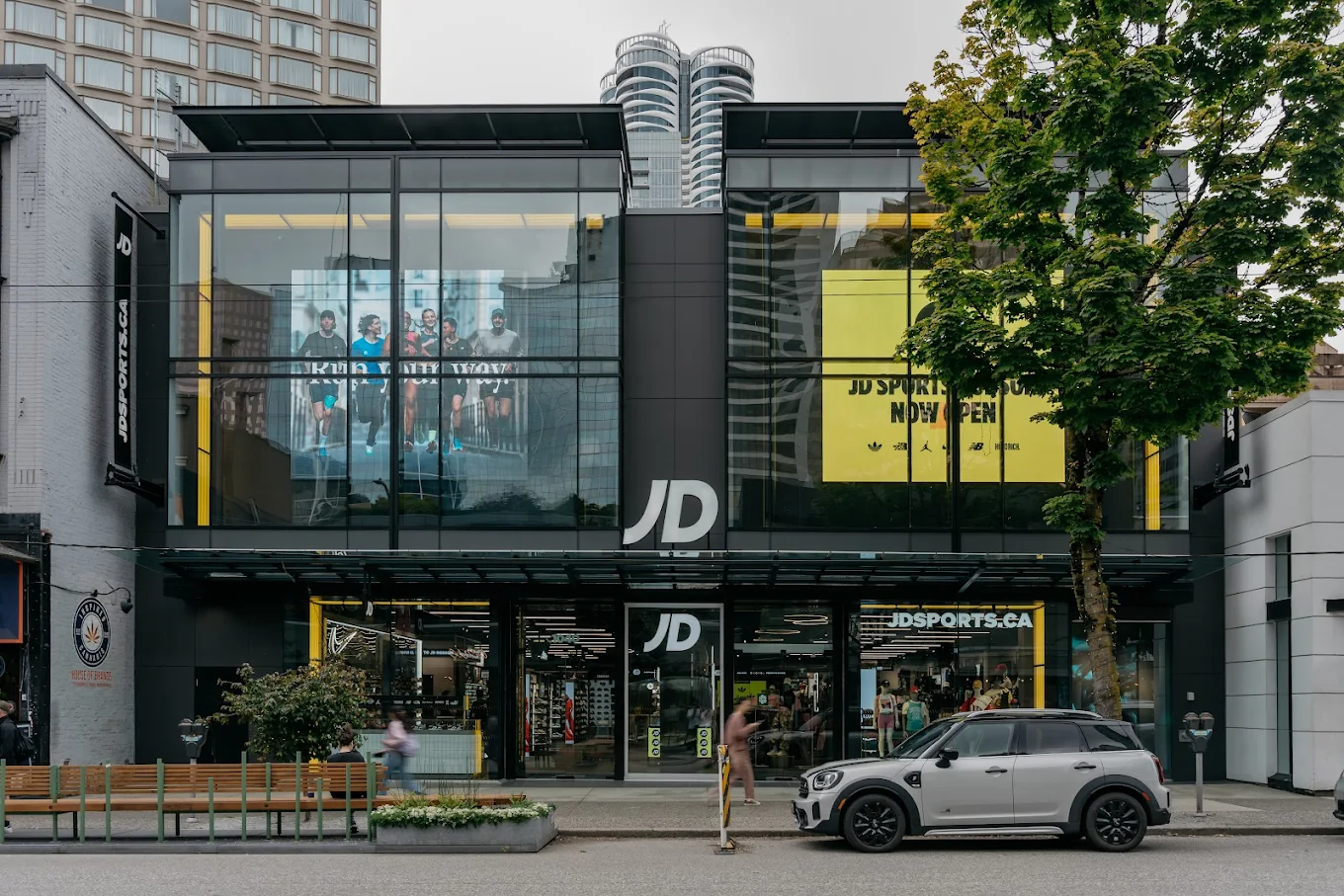
Lume runs the low-voltage scope for multi-site retail rollouts, with direct NSO and IT coordination. We work with brands like JD Sports on multi-store programs, and we coordinate with the GC, the IT team, and the brand’s NSO lead through to opening day.
If you are running a multi-site retail rollout and need a low-voltage partner that can move at NSO pace, talk to Lume.